|
(para ver esta página en español)
Last edits on 7 February 2026
| |
(para ver esta página en español)
Last edits on 7 February 2026
Sections
|
This list of links is aimed at those who wish to obtain more detailed information on minerals.
We will add more links and update the ones already here as we get information on more useful links. If you have any suggestions please let us know.
Some of these links in turn lead you to even more link pages, which can also be useful. For example the Mineral collectors page has links to other useful museum sites.
Mineralogical information
With several specialized sections and its own advanced software, FMF has a scientific spirit that makes it different from other regular forums.
The FMF Gallery has several thousands of minerals and rocks, which can be found with a quick and convenient search system.
John is a professor of mineralogy and also a long time mineral collector.
Mineral Magazines
Unfortunately, it is no longer being published, but their website still has issues of the magazine available, as well as numerous high-quality books.
Essential for any mineral collector worldwide.
Unfortunately, it is no longer being published, but their website still has issues of the magazine available, as well as numerous high-quality books.
With articles on the mineralogy of anywhere but with special attention to the geographical regions of Catalonia and the rest of the Iberian Peninsula.
Unfortunately, it is no longer being published.
Currently there is no longer published, in the past it was published in Madrid.
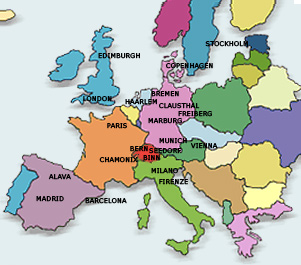
Museums
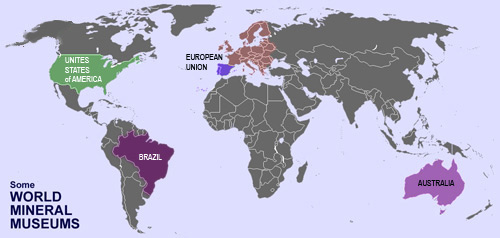
Much more information and photos here: National Museum of Natural History (Smithsonian)In the Los Angeles County Museum of Natural History. Very high quality material.
To know more please use American Museum of Natural History of Los AngelesIn the Los Angeles County Museum of Natural History. Very high quality material.
To know more please use American Museum of Natural History of Los Angeles
To know more please use Mineralogical and Geological Museum at Harvard
To know more please use Perot Museum of Nature and Science, Dallas, Texas. An innovative idea
To know more please use A. E. Seaman Mineral Museum, Michigan Technological Univ., Houghton, Michigan
To know more please use University of Arizona Mineral Museum
To know more please use Colorado School of Mines Geology Museum
To know more please use Rice Northwest Museum of Rocks and Minerals
To know more please use University of Delaware Museum of Minerals
To know more please use Museo de Ciencias Naturales de ÁlavaLocated in the city of Barcelona, it serves as the public headquarters of the Museu de Ciències Naturals de Barcelona and was inaugurated in 2011 following modern museum techniques. As part of the permanent exhibition "Planeta Vida," a portion of the mineralogy and petrology collections, formerly housed in the Martorell Museum of Geology, is displayed. The museum has a web page in Catalan, Spanish and English.
To know more please use "Museu Blau" el nuevo Museo de Geología de BarcelonaThe museum of the Madrid school of mines. A classic building with excellent historic specimens.
To know more please use Relación de los fondos mineralógicos del Museo de la Escuela de Minas de MadridThe Geo-mining Museum is located in a very beautiful, classic building in Madrid with a skylight that is among the most beautiful in the world. A visit is worth it.
To know more please use Visita al Museo Geominero
To know more please use Museu Mollfulleda de Mineralogia d'Arenys de Mar, Barcelona
The Museum collection is currently made up of about 5,000 minerals. Highlights among its reserves are the specimens from classic Catalan locations as well as from the rest of Spain.
To know more please use Paris School of Mines
To know more please use The Museum National d'Histoire Naturelle in Paris
To know more please use Musée des Cristaux - Espace Tairraz (Chamonix)
To know more please use Terra Mineralia (Freiberg, Saxony, Germany)
To know more please use Mineralogical Museum of Marburg
To know more please use Museum Fur Naturkunde Berlin
To know more please use Natural History Museum of Bern (Switzerland)
Several and excellent alpine minerals from Swiss strahlers recent finds.
To know more please use Binntal Regionalmuseum Binn, Valais
To know more please use Natural History Museum London
To know more please use National Museum of Scotland
To know more please use The Lead Mining Museum
To know more please use Hunterian Museum
To know more please use Naturhistorisches Museum Wien
To know more please use Universalmuseum Joanneum
The Kongsberg and Greenland Suites are really remarkable.
To know more please use Geological Museum
The mineralogy section has notable Italian and pegmatite specimens, enhanced by excellent material from Madagascar.
To know more please use Museo Civico di Storia Naturale
To know more please use The Adalberto Giazotto collection in Florence
With an enjoyable mineral collection, Teylers Museum really deserves the trip if you are in Amsterdam.
To know more please use Teylers Museum HaarlemThe Norwegian Mining Museum is located in Kongsberg city centre and offers a good vision of this historic silver mining area. It offers also the possibility of guided visits to the old mines.
To know more please use The Norwegian Mining Museum and the Silver Mines
To know more please use The MIM Museum in Beirut, Lebanon, and specifically, What does the mim Museum and it minerals mean
Spanish groups and organisations
Grup Mineralògic Català. This is the mineralogical group from Catalonia, the region that includes Barcelona. They are very active and helpful and they publish the magazines Mineralogistes de Catalunya and Paragénesis (see the "Magazines" section) and also the column Infominer on line.
They contributed to the publication Paleomina, which at the time, when it was still being published, was an excellent magazine focused on minerals and fossils.
They published Paleomina, which at the time, when it was still being published, was an excellent magazine focused on minerals and fossils.The GeoMuseum Valentí Masachs in Manresa, Barcelona goes beyond a classical Geology museum. It not only displays but also explains the use of the 5,000 minerals and the 2,000 rocks that make up its resources and organizes many activities related to the Geology, many of them promoted by Dr. Josep Maria Mata i Perelló, director of the Museum from 1980 to 2003.
To know more: Zona AMUMINAS
To learn more: Museu Martorell
Other groups and organisations
AGAB Belgian association of geologists, very enthusiastic and with lots of information about European Shows. Specialized in the mineralogy of the DR Congo. Géopolis A group of French people that are all interested in Earth Sciences. It is made up of collectors, professionals, geologists, students, museum curators, etc. A French reference site for people interested in minerals. Pegmatite Interest Group An interactive webpage, hosted by the Mineralogical Society of America, that is dedicated to the pegmatites. Serves as a bridge between academic professionals and amateur scientists, collectors, and other pegmatite enthusiasts.
Shows
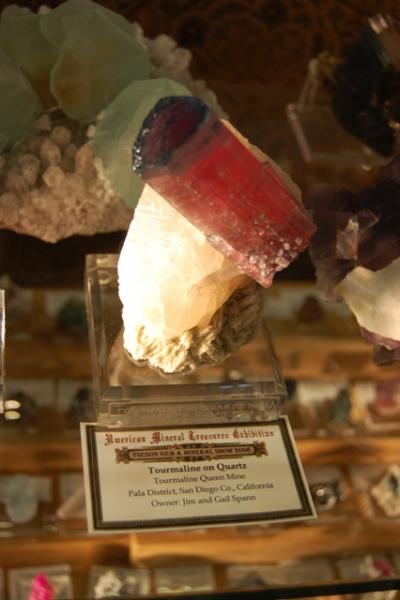
 During the first two weeks of each year, in the middle of the Arizona desert you can visit the annual Tucson Gem & Mineral Showcase, the biggest group of Shows in the US and in the world.

To know more use this link
If you want to learn more about its last edition, held in 2019, you can use this link
If you want to learn more about the 2010 edition, you can use this link
Minerales.Info - Ferias de Minerales
Mineralogy on line
To learn more, you can use this link.
To learn more, you can use this link (in Spanish)
The joy of the discovery and the field work to dig nice minerals.
All of the extraction process, from the discovery to the actual removal.The marvelous collection "Cristalli" & Brief guide about Florence
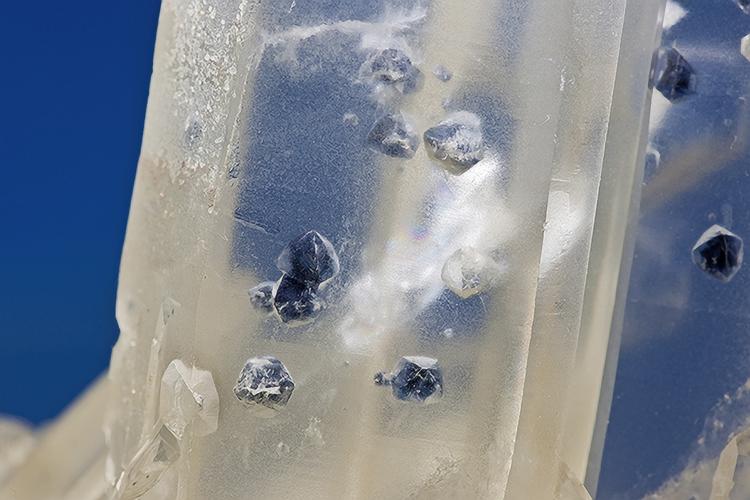
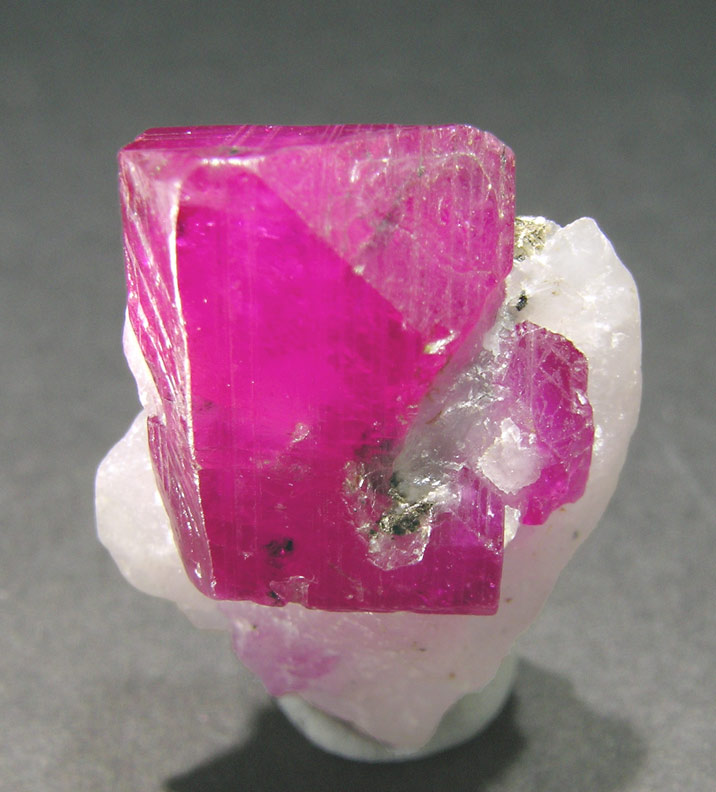
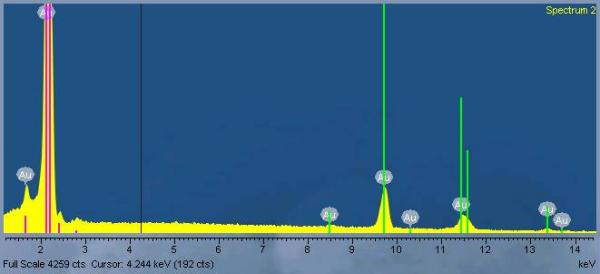
It seems that not only they contain no Palladium, but also it appears that they are electrolitically grown.
Minerales.Info - Mineralogical Shows
Events
TUCSON SHOWS
Every year from the last week of January to the middle of February and at the Sonora desert, in the city of Tucson, you can visit "Tucson Show", the biggest group of Shows of Minerals in the US and in the world.
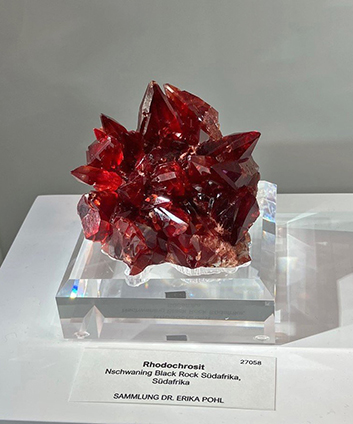
If you would like to learn more about previous editions
of the Tucson Show, click on this link
MINERALEXPO Barcelona-Sants (SPAIN)
27 February - 1 March 2026
The people that organize the show are the Grupo Mineralógico Catalán, a groups whose objective is
to promote mineralogy. So that is why the show has a limited number of dealers,
with the aim of focusing on minerals for collectors.
ESCUELA DE MINAS - MADRID SHOW
6-8 March 2026
Held in te halls of the prestigious Escuela de Minas, Madrid. Along with Mineralexpo
it has the best atmosphere of all Spanish shows.
In both cases people go to talk about minerals and to be there "for the minerals".
Use this link to find out what was new at the Mineralexpo Barcelona-Sants 2025 Show
(text only in Spanish language)Use this link to find out what was new at the Escuela de Minas 2025 Show
(text only in Spanish language)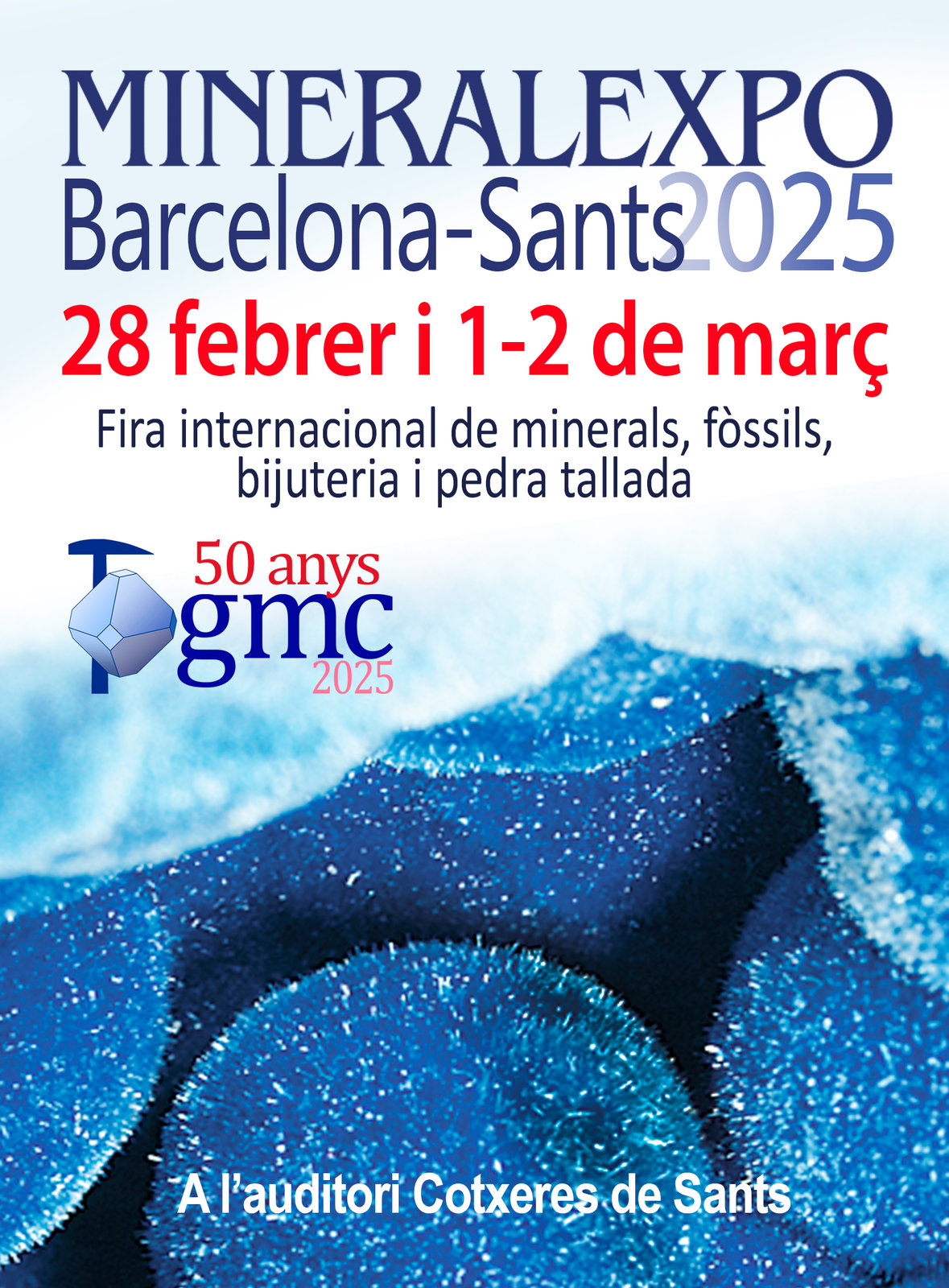
If you would like to learn more about previous editions
of the Mineralexpo Shows click on this link
or for previous Escuela de Minas - Madrid Show, click on this link
SAINTE-MARIE-aux-MINES
24-28 June 2026
Towards the end of June a very special place in France: Val d'Argent, has a show that is different from all the regular ones. Together collectors, visitors and dealers share the marvellous countryside, the pleasant food and, of course, the minerals. So if above all else you want to enjoy yourself during a show this one is not to be missed.
Click on this text or on the image
to find out about
Sainte-Marie-aux-Mines 2025 show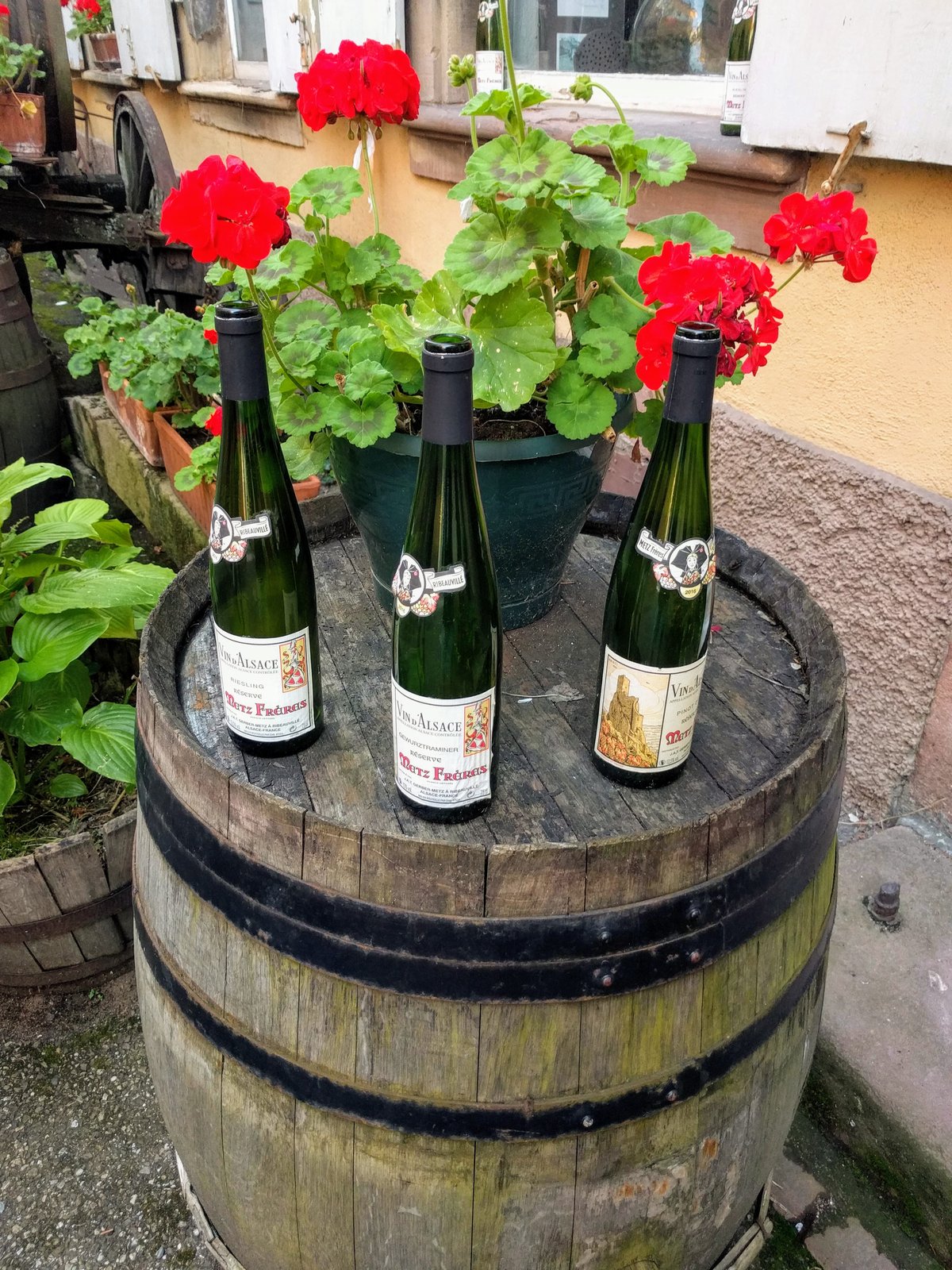
If you would like to learn more about previous editions
of the Ste. Marie Show, click on this link
MINERALIENTAGE MÜNCHEN
22-25 October 2026
A powerfull show, with an enormous range of minerals and extraordinary displays
If you would like to learn more about previous editions
of the Munich Show, click on this link
Some Virtual Shows, as well as some other Shows that are no longer held nowadays
If you want to see some information about shows we used to attend, but actually no longer visit, then use this link or click on the photo.
Suggestions:
FMF Forum
Home
page
MineralsComments Minerales.info Feedback
FormSearch
All pictures, text, design © Fabre Minerals 1996-2026 — On the web since 1996

 Welcome
to this site for information on minerals and on the world of mineralogy. In
this site you will see a selection of the main sources of useful information available
on the web. There is also information on events and excursions that may be of
interest to you.
Welcome
to this site for information on minerals and on the world of mineralogy. In
this site you will see a selection of the main sources of useful information available
on the web. There is also information on events and excursions that may be of
interest to you. 


 Useful links